Jan Rehaag

Photo story

Varosha, Cyprus

Once a sparkling beach resort, Varosha is now a magnet for disaster tourism.

Photos and text by Jan Rehaag ·

What looks like a film set for the apocalypse was once one of the most popular holiday resorts. Then came the war. In 1974, after a Greek-backed coup and the Turkish invasion that followed, Turkish troops took control of the city. The Greek Cypriot residents fled. They were never again allowed to return to the town they once called home.

More than 50 years later, the city seems frozen in time, bearing witness to the conflict that shook Cyprus generations ago. But against the eerie backdrop, masses of tourists explore the streets by bike or on foot, closely watched by the Turkish army. The remnants of destroyed lives have now become a tourist attraction.
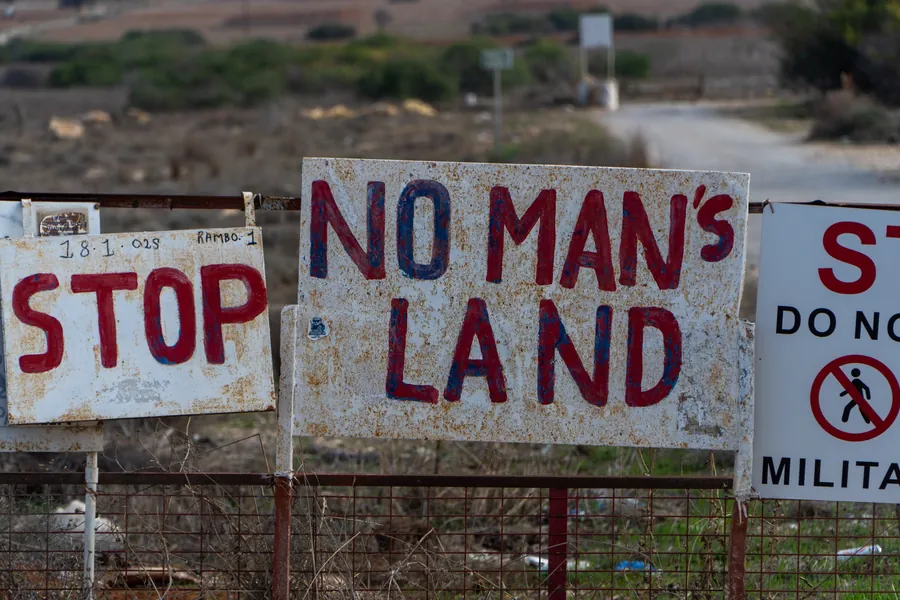
Hand-painted signs: Stop, No man’s land
Hand-painted signs mark the buffer zone on the Greek Cypriot side, looking towards Varosha. Photo: Jan Rehaag
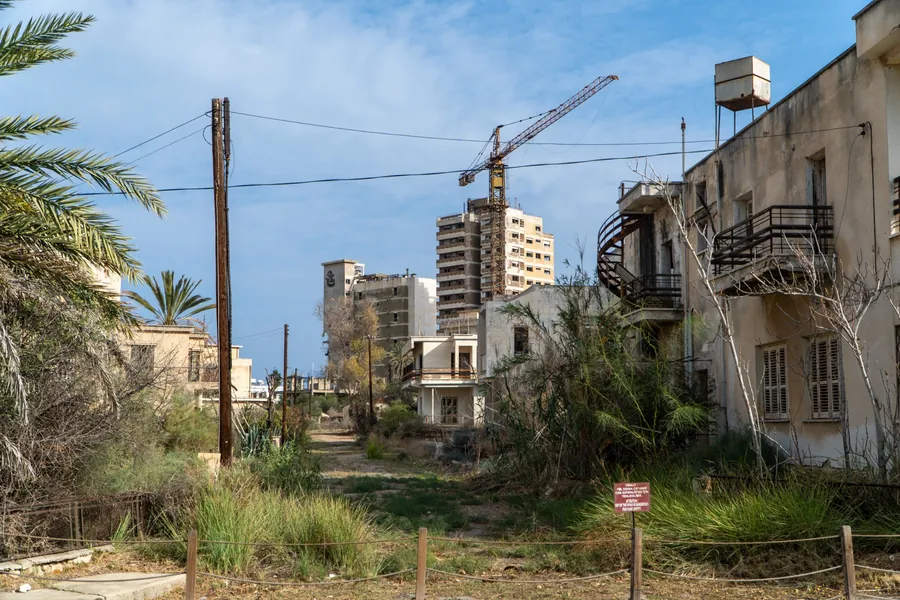
An overgrown street with a rusting crane and abandoned hotels
Inside Varosha, the streets are overgrown. Some of the buildings never saw completion. Photo: Jan Rehaag
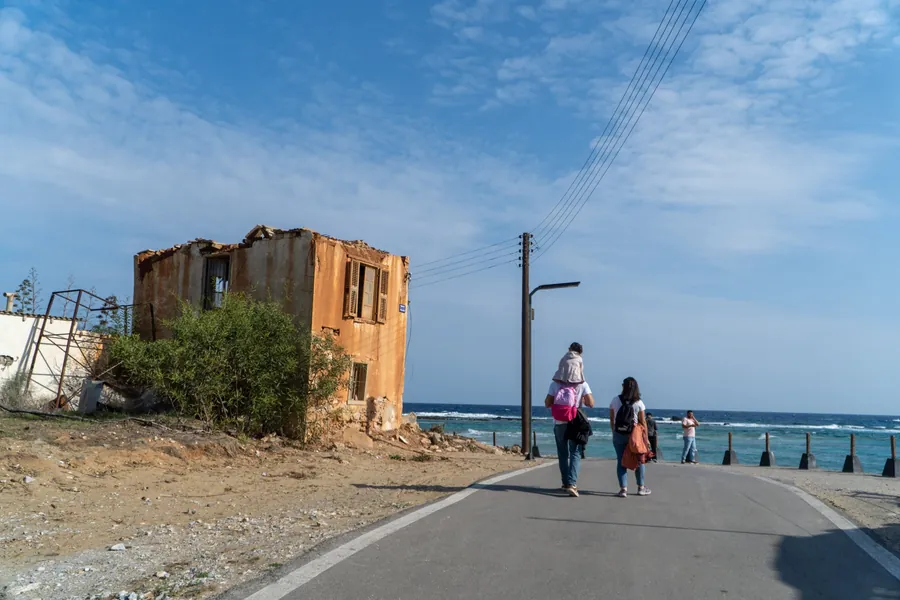
A family walks along a seaside road past a ruined house
Families walk past the ruins along the seafront. Photo: Jan Rehaag
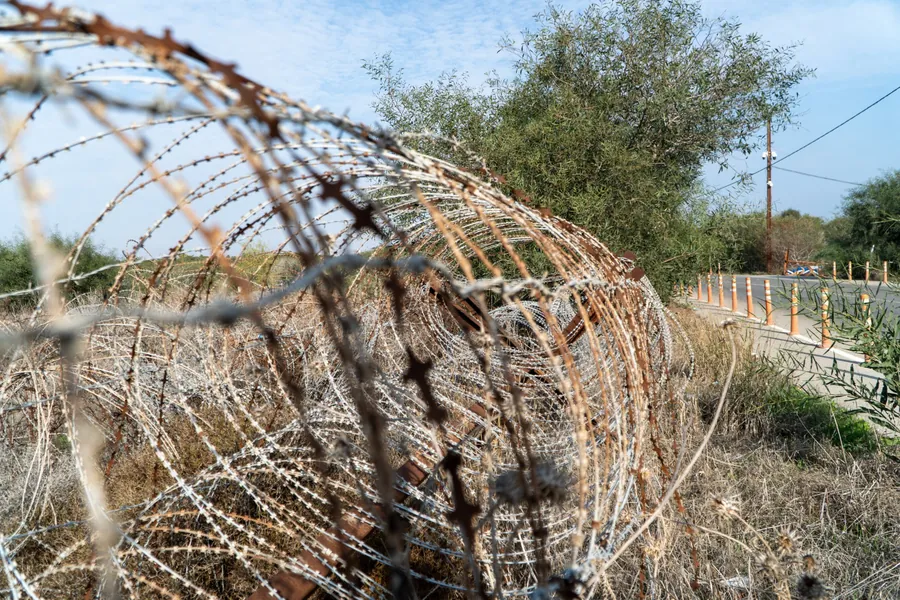
Coils of rusty barbed wire beside a road
Rolls of barbed wire line the roads around the fenced-off zone. Photo: Jan Rehaag
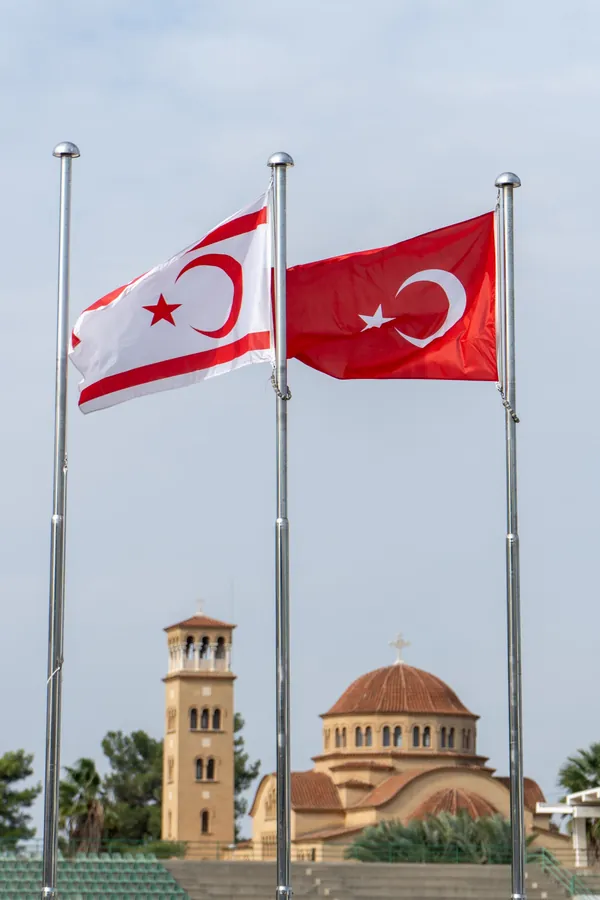
The flags of Northern Cyprus and Turkey in front of a church
The flags of Northern Cyprus and Turkey fly in front of a Greek Orthodox church. Photo: Jan Rehaag
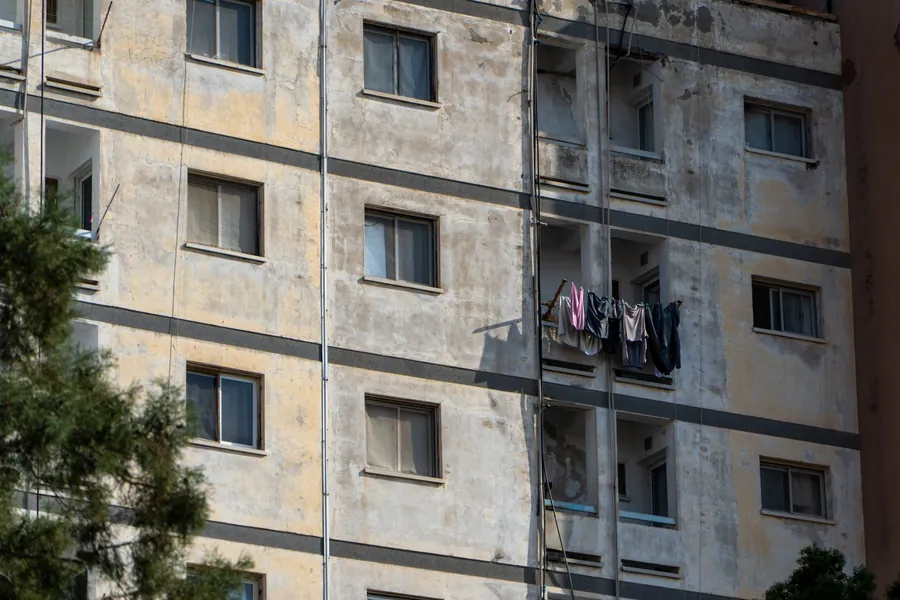
Laundry hanging from a balcony of a weathered apartment block
Signs of life, 50 years on: fresh laundry hangs from a balcony. Visitors can only walk the roads, the Turkish military keeps everyone out of the buildings. Who lives here is unclear. Photo: Jan Rehaag
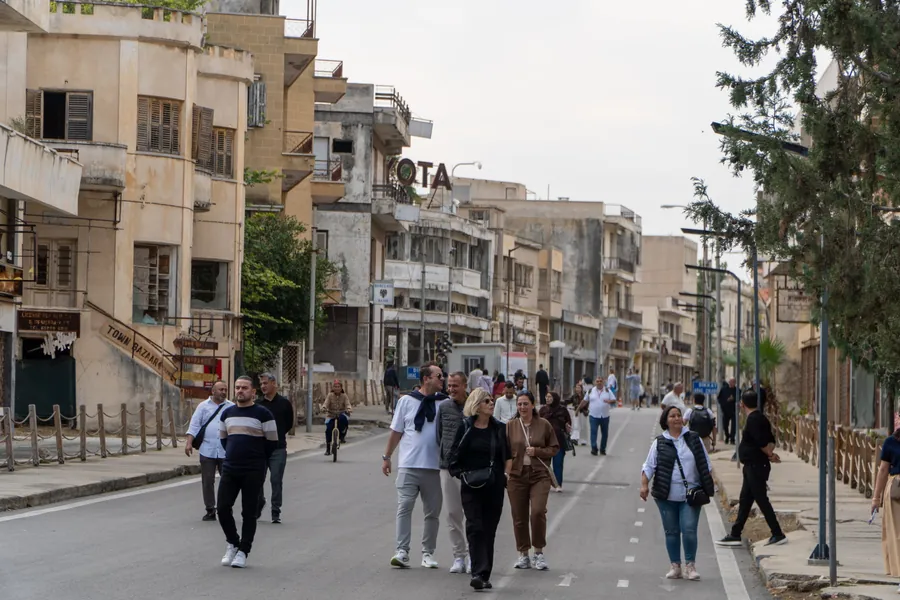
Tourists walking down a street of abandoned buildings
Crowds of tourists walk through the ruins of the former city centre. Photo: Jan Rehaag
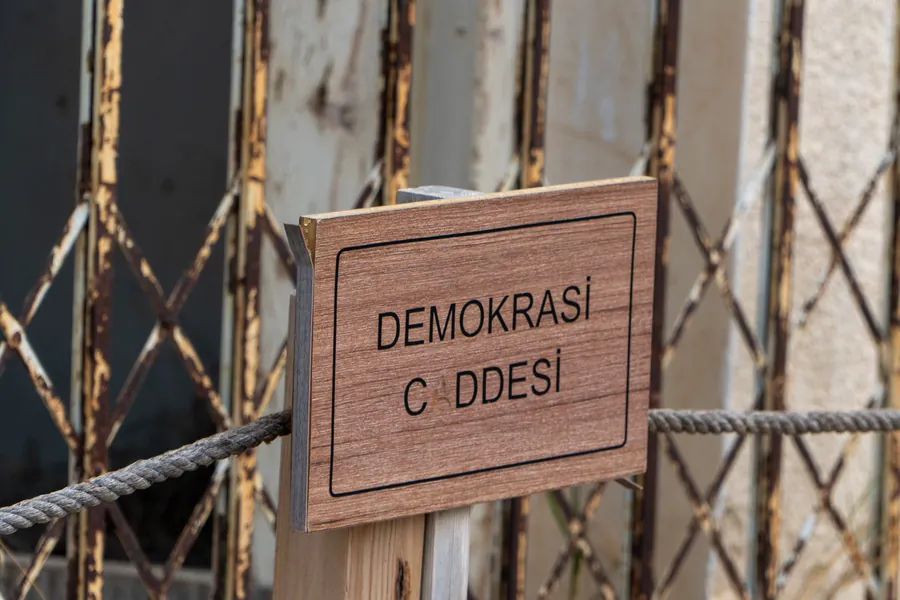
A street sign reading Demokrasi Caddesi
Demokrasi Caddesi: Democracy Street. Photo: Jan Rehaag
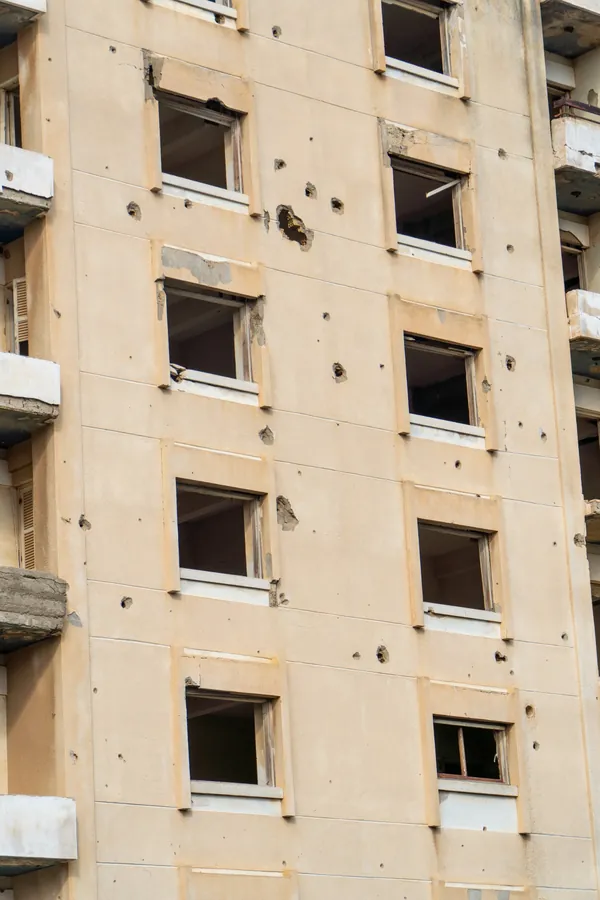
A facade marked by bullet holes
Bullet holes still scar the facades, more than 50 years after the war. Photo: Jan Rehaag
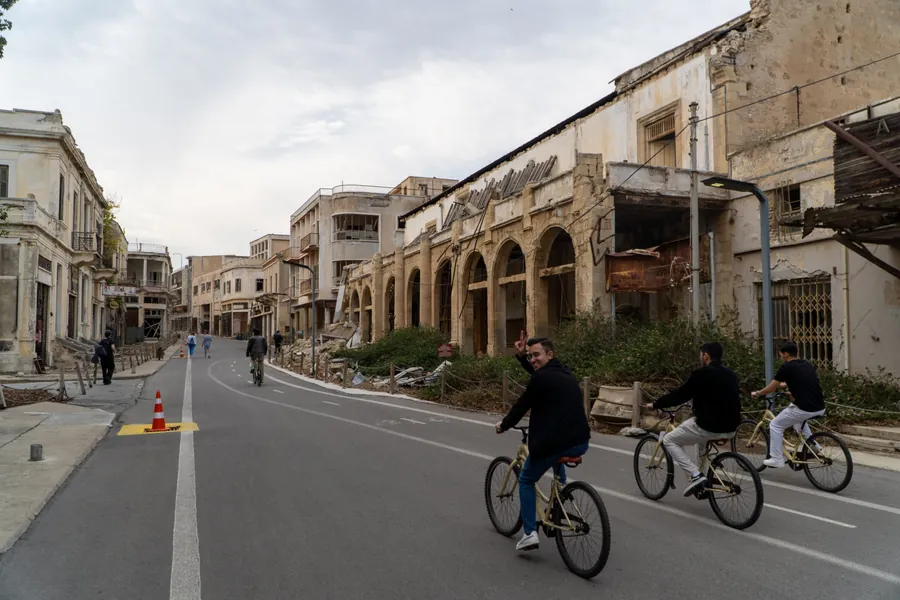
Three young men on rental bikes, one making a peace sign
Visitors cycle past a collapsing arcade on one of Varosha’s main streets. Photo: Jan Rehaag
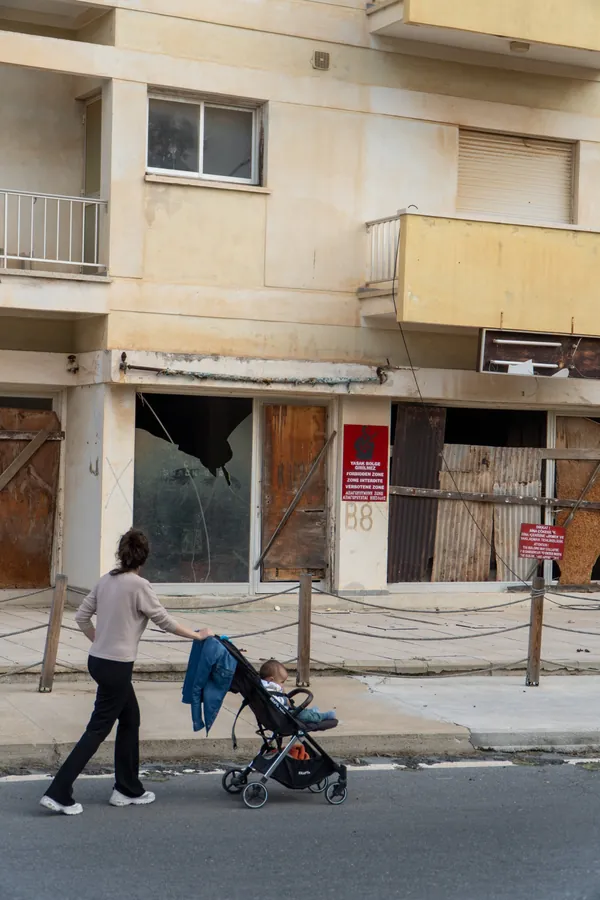
A woman pushes a pram past boarded-up shops and a forbidden-zone sign
A woman pushes a pram past a building marked as a forbidden zone. Photo: Jan Rehaag
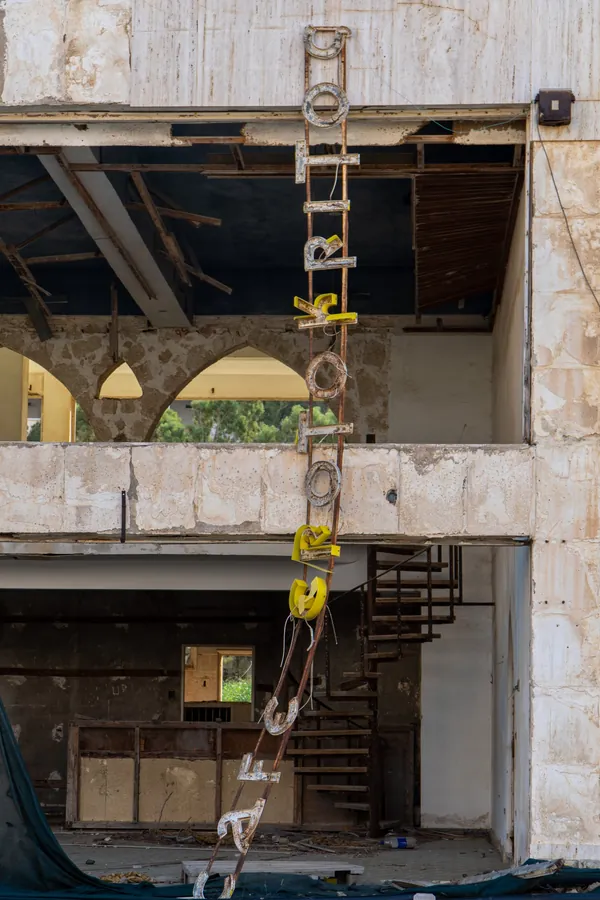
Broken letters of an old sign hanging in front of a ruined building
The broken letters of an old sign, left to rot. Photo: Jan Rehaag
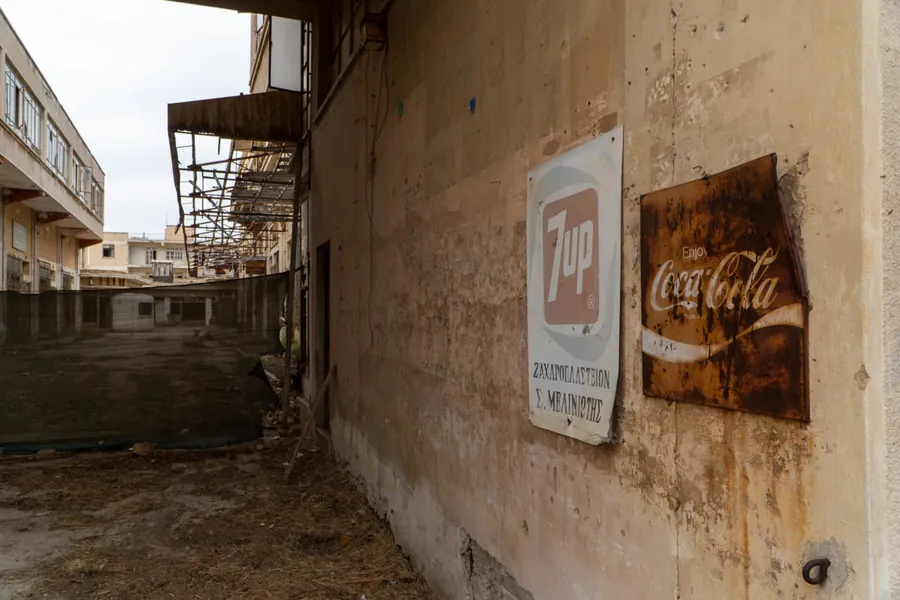
Old 7up and Coca-Cola signs on a crumbling wall
Frozen in time: old 7 Up and Coca-Cola adverts on a wall. Photo: Jan Rehaag
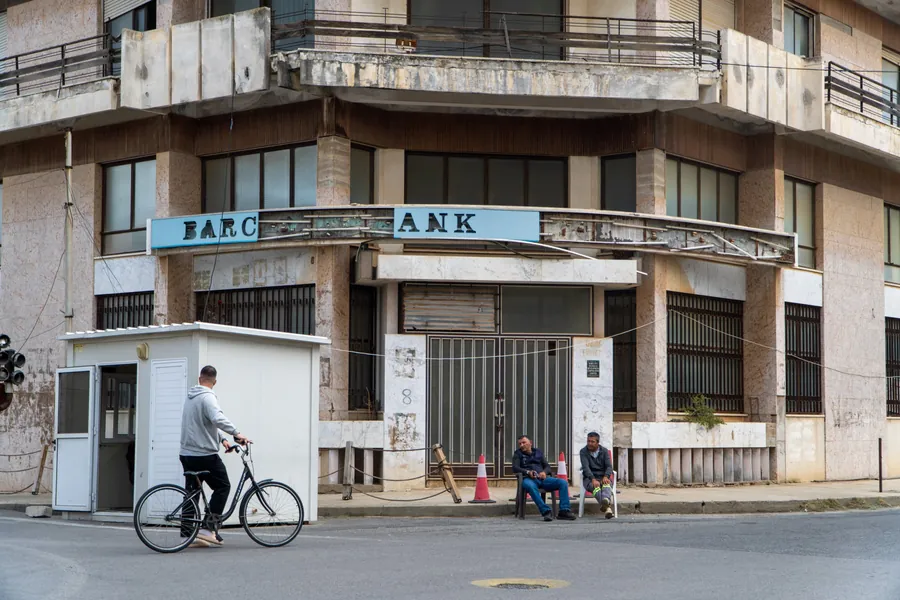
A bicycle passes a closed Barclays Bank branch with two men sitting outside
An old Barclays branch, seemingly still under guard. Photo: Jan Rehaag
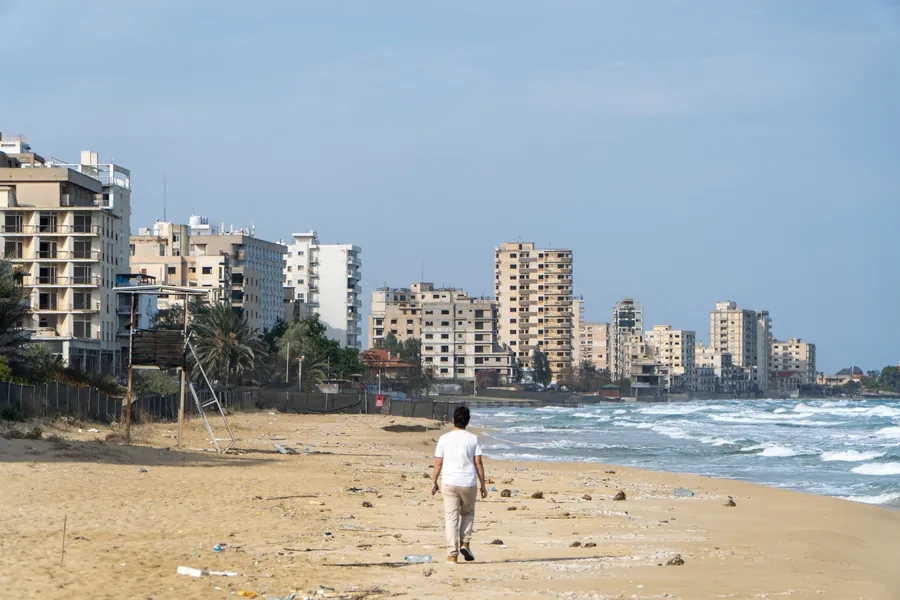
A man walks along the beach in front of the abandoned hotels of Varosha
The beach of Varosha: once a place to relax, now the facade of a disaster. Photo: Jan Rehaag